 Image 1 of 1
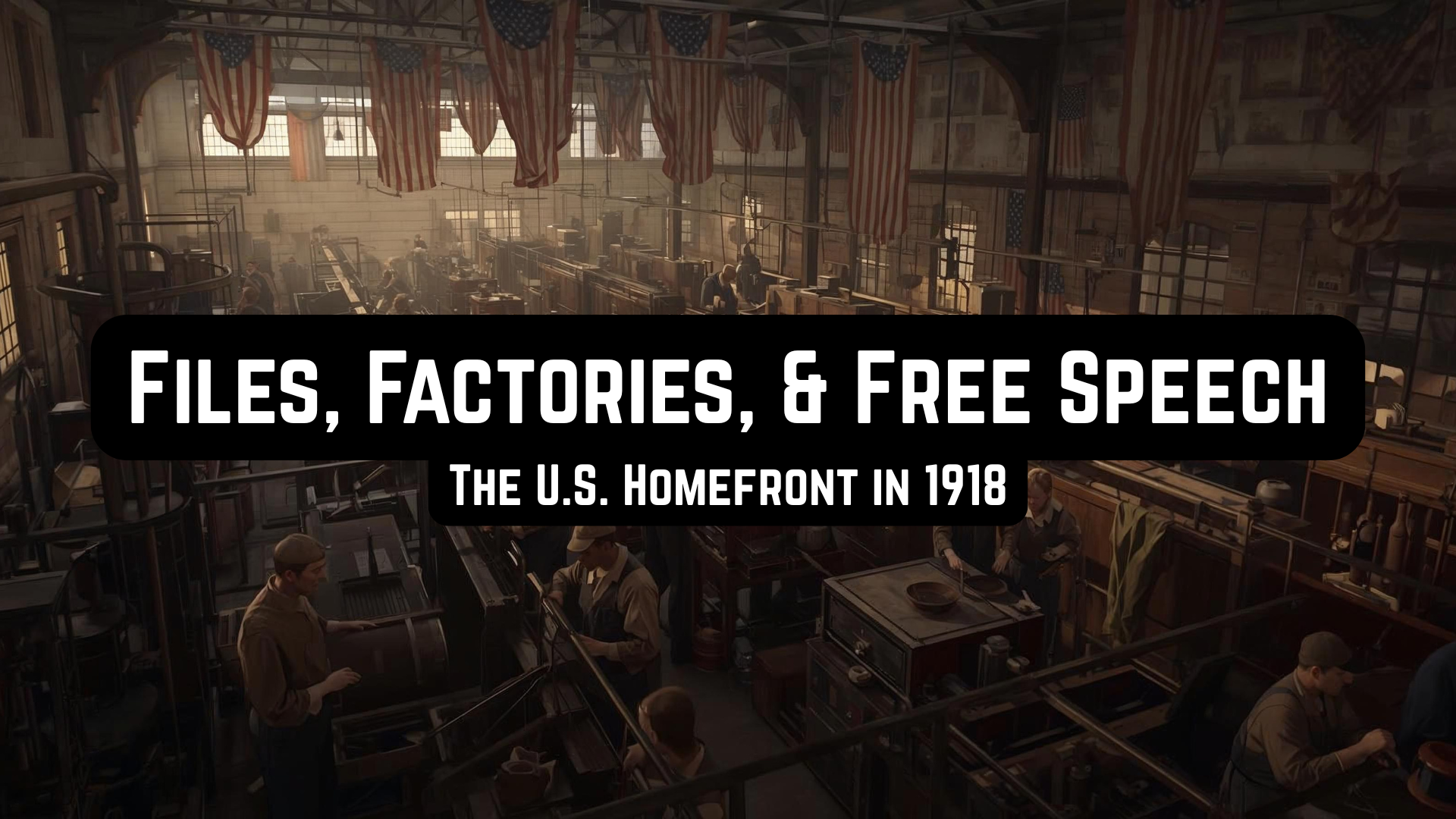
Step into 1918 America, where the roar of factory machines mixed with the hum of dissent and change. Files, Factories, and Free Speech takes students inside the United States homefront during World War I through a fully guided simulation and a creative writing extension that captures the voices of the era.
In this immersive experience, students analyze how war reshaped daily life. They will track the Great Migration, exploring limits on free speech through the Espionage and Sedition Acts, and evaluating the controversial imprisonment of Eugene V. Debs. After completing the simulation, students bring history to life with the “Letters from the Homefront” project, where they craft journal entries from multiple perspectives to reveal the emotional and political complexity of 1918 America.
Every element, from inquiry prompts to assessment rubrics, is classroom-tested, standards aligned, and ready to deploy. It’s the perfect blend of simulation, storytelling, and standards-based rigor that makes history feel alive and relevant.
The Homefront During World War I Historical Context - This student-facing resource provides essential background on the Great Migration, the Espionage Act, and the imprisonment of Eugene V. Debs. It is designed to prepare students for the simulation while grounding their understanding of wartime America in historical context.
The Homefront During World War I Simulation Instructions - An interactive, role-based simulation where students act as legal advisors in Washington, D.C., analyzing the Great Migration, the Espionage Act, and the trial of Eugene V. Debs.
Letters from the Homefront Extension Activity - A creative writing task that guides students to compose three historically grounded letters from diverse 1918 perspectives, combining empathy and evidence-based understanding.
Letters from the Homefront Rubric - A detailed, 100-point rubric assessing historical accuracy, perspective, use of evidence, organization, and presentation.
Step into 1918 America, where the roar of factory machines mixed with the hum of dissent and change. Files, Factories, and Free Speech takes students inside the United States homefront during World War I through a fully guided simulation and a creative writing extension that captures the voices of the era.
In this immersive experience, students analyze how war reshaped daily life. They will track the Great Migration, exploring limits on free speech through the Espionage and Sedition Acts, and evaluating the controversial imprisonment of Eugene V. Debs. After completing the simulation, students bring history to life with the “Letters from the Homefront” project, where they craft journal entries from multiple perspectives to reveal the emotional and political complexity of 1918 America.
Every element, from inquiry prompts to assessment rubrics, is classroom-tested, standards aligned, and ready to deploy. It’s the perfect blend of simulation, storytelling, and standards-based rigor that makes history feel alive and relevant.
The Homefront During World War I Historical Context - This student-facing resource provides essential background on the Great Migration, the Espionage Act, and the imprisonment of Eugene V. Debs. It is designed to prepare students for the simulation while grounding their understanding of wartime America in historical context.
The Homefront During World War I Simulation Instructions - An interactive, role-based simulation where students act as legal advisors in Washington, D.C., analyzing the Great Migration, the Espionage Act, and the trial of Eugene V. Debs.
Letters from the Homefront Extension Activity - A creative writing task that guides students to compose three historically grounded letters from diverse 1918 perspectives, combining empathy and evidence-based understanding.
Letters from the Homefront Rubric - A detailed, 100-point rubric assessing historical accuracy, perspective, use of evidence, organization, and presentation.